

Fistula Surgery Training Initiative
Since 2012, the FIGO Fistula Surgery Training Initiative has been building the capacities of local trainee fistula surgeons – ‘FIGO Fellows’ – and multidisciplinary teams to provide treatment for women suffering from obstetric fistula in some of the world’s most underserved communities.
Project contacts
Supported by
Texas Children’s Global Health Network, an anonymous foundation and Hamlin Fistula Australia.
Image

|
What is obstetric fistula?
An obstetric fistula is a devastating childbirth injury that results from prolonged, obstructed labour, causing an abnormal opening between the vagina and the bladder and/or rectum. If not surgically repaired, the affected woman is incontinent for the rest of her life, often leading to suffering and isolation.
The condition affects two million women in 60 low-resource countries of Sub-Saharan Africa and certain parts of Asia, with up to 100,000 additional women developing a fistula every year in some of the world’s poorest and most disadvantaged communities. Obstetric fistula is a neglected public health and human rights issue.
A skilled fistula surgeon can repair most cases of obstetric fistula. But because of a global shortage of these specialists, it is estimated that only one woman in 50 has access to fistula treatment. When taking into account the human suffering brought about by the condition, this is unacceptable.
What is the Fistula Surgery Training Initiative doing to reduce the global treatment gap?
Training fistula surgeons and multidisciplinary teams
To make a meaningful contribution to addressing the global treatment gap, the FIGO Fistula Surgery Training Initiative is an ambitious multi-year programme training local fistula surgeons – FIGO Fellows – and multidisciplinary teams from affected countries to provide life-transforming care to a greater number of women suffering from this debilitating condition. This capacity building takes place through training placements in accredited Training Centres, followed by ongoing intermittent coaching sessions.
The training programme utilises a variety of resources to facilitate learning. Visit the brand new Fistula Resource Hub to see the full range of training materials we have available, including the newly released FIGO Fistula Surgery Training Manual (2022).
As of 31 December 2024, 97 Fellows on programme, 28 countries (With new countries – Niger, Benin, Cameroon, Madagascar, Eritrea and Burkina Faso) enrolled on the programme, and have collectively provided over 25,000 fistula repair operations. FIGO is committed to expanding this pioneering initiative, to train more surgeons and teams so that significantly more women are treated in the future.
Applying to the training programme
Applications for 2025 training placements are closed, however the waiting list for 2026 is open.
We welcome applications on a rolling basis from dedicated medical doctors and multi-disciplinary teams from fistula-affected countries who are committed to helping women with fistula. Head to our Applying to the Fistula Training Initiative page to learn more about the programme structure, application process and selection criteria.
Supplying fistula surgery equipment
To address the fistula surgery equipment gap and ensure women receive the best possible care, FIGO, in collaboration with Medical Aid International (MAI), supplies much needed surgical equipment to Fellows. Equipment supplied through this collaboration includes the FIGO Specification Fistula Instrument set, which was developed based on the recommendations of leading fistula surgeons.
For more information, or to enquire about placing an order, please contact the fistula project team.
Raising awareness on the International Day to End Obstetric Fistula
On 23 May each year, FIGO joins the global community to raise awareness about obstetric fistula and generate much-needed additional support for affected women.
Visit our International Day to End Obstetric Fistula page for a comprehensive range of resources, including authentic stories, graphics and social media assets that you can use to highlight and add momentum each 23 May to the International Day to #EndFistula.
Project Resources
-
Fistula Surgery Training Initiative newsletter
Image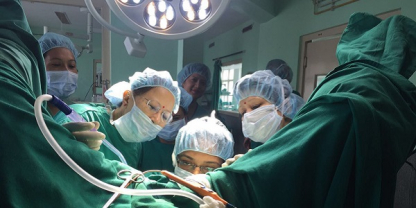 Read more
 -
Fistula Resource Hub
Image Read more
 -
23 May International Day to End Obstetric Fistula
Image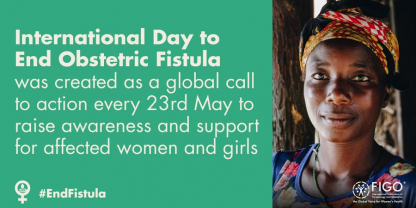 Read more
 -
10-10-10 Action Plan
Image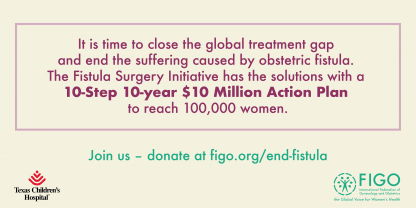 Read more
 -
Dr Andrew Browning on the treatment gap
 Image
Image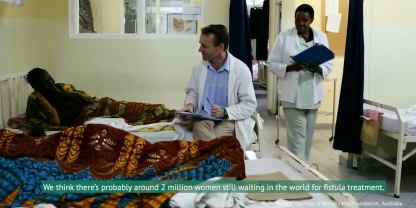 Read more
 -
IJGO Obstetric Fistula: Where we currently stand
Image Read more